


| |
|||||
|
|
|
|
|
|
|
|
|
 |
 |
 |
|
||
 |
||||||
 |
|
|||||
|
||||||
 |
|
|||||
|
||||||
 |
|
|||||
|
||||||
 |
|
|||||
|
||||||
 |
||||||
 |
|
|
 |
 |
|
|
 |
||||
 |
||||
 |
||||
 |
||||
 |
|
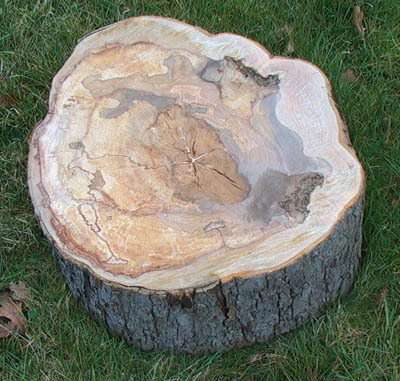
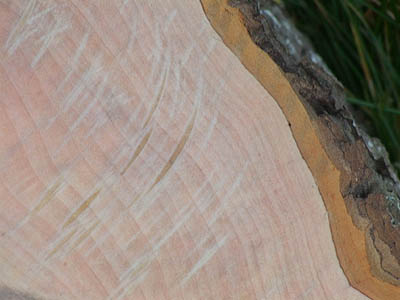
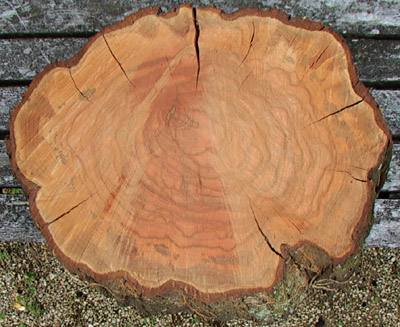
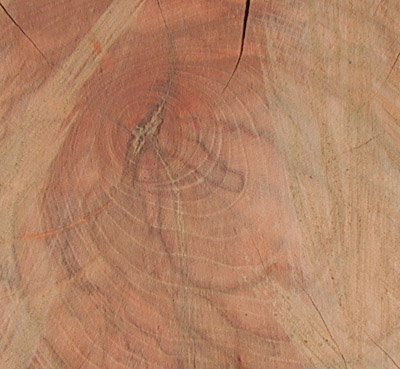
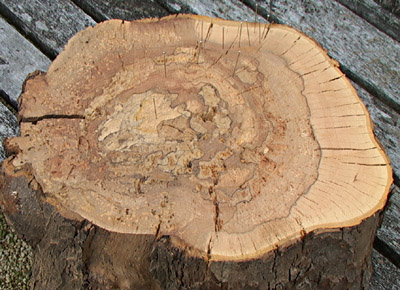
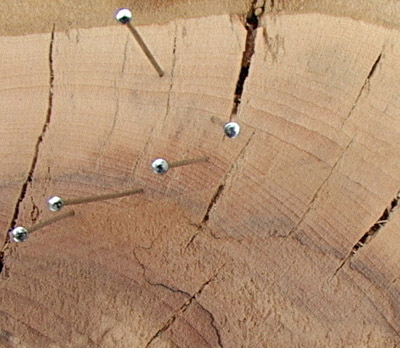
Sometimes a whole bough might break off of a tree, leaving the tree healthy and viable. The bough can also be sectioned for ring counting and, if it is likely to be one of the earliest formed boughs in the life of the tree, ring counting will give a date very close to the date of the tree itself. Such boughs would normally be only 3-10 years later than the age of the tree. Being hollow up high does not necessarily mean the trunk will be hollow low down, but it often is. There can also be pockets of decay within the trunk and soft spongy areas, usually the result of water getting in from hollow branches above. Photographs below show both of these impediments and also areas of discoloration that can reduce the visibility of rings. Nevertheless, with the right approach, the rings can often be counted. If it is not stating the obvious, a ring corresponds with one year’s growth of the tree, the outermost being the most recent. Do not include the bark which can, on occasion, also reveal tightly packed rings. When growth conditions are good, with enough moisture, light and warmth, the rings will be wide. In lean years the rings can be very close, and easily missed without the aid of a magnifying glass. Dendrochronologists and meteorologists can glean sophisticated climatic data from such variations in sequences of rings and can then use the sequences of ring spacing to date fragments of old wood. Although we do not believe anyone has yet done this with apples or other fruit trees, it might well be possible to date a tree from the inner trunk if this remains intact and the rest is lost. The Process of Ring Counting The first tip is to cut the section of trunk as cleanly and flatly as possible. Usually a chain saw would be used and it will save a lot of time later if the cut is as level, even and smooth as possible. The section will need to be sanded finely and a rough uneven cut will need a lot of sanding and will make the use of a flat sanding machine difficult if the face is uneven. A sharp hand saw would be better, but a lot more work. The second necessity is to allow the wood to dry out. Even if dead, apple wood seems to absorb moisture from the air when outside and with dead trees there might well be significant rain penetration that must be allowed to evaporate. This can take several days in the dry and warm. Do not be too concerned if cracks start to appear, moving in from the edge. This will not become so serious that ring counting is compromised. The third stage is the sanding. If you have an electric plane, then you can save a lot of time, but use it on a very shallow setting. It can be a long and arduous job sanding by hand (unless the section has been cut with a very fine toothed saw) and you might prefer to use an electric sander. Having tried both methods, we think hand sanding is better, unless you have a powerful professional sander. If you plan your route across the section of wood for the ring counting avoiding any soft or decayed areas, you will often find that a relatively small part of the section actually needs sanding. Initially you might not be able to see the rings at all, before sanding. You will know when you have sanded enough and the rings are fully revealed. You should then dust off the surface and wipe it thoroughly with a wet cloth, several times. Leave it to dry! Do not be temped to use oils to bring the rings out. It doesn’t really work and you would then have to sand all over again. The rings will now be visible where the wood is solid and undecayed, but there might be areas where the wood has gone pulpy or even hollow. Plan the ring counting, hoping to go around decayed areas and pick up the rings again further round. Often, in the very centre of the trunk the wood will be pulpy and the sanding will have left it slightly depressed, with no rings visible. These areas can often be made to reveal their rings by wetting the wood and using an obliquely shining light on them. They come into relief and can be counted separately, the rest being counted when dry. We have found the best way to avoid losing count is to use dressmakers’ pins. Counting from the centre outwards, put a pin into a ring at every ten, then count up the pins at the end. Good Luck. If you should come up with a tree ring count of 150 plus, please do let us know.
|